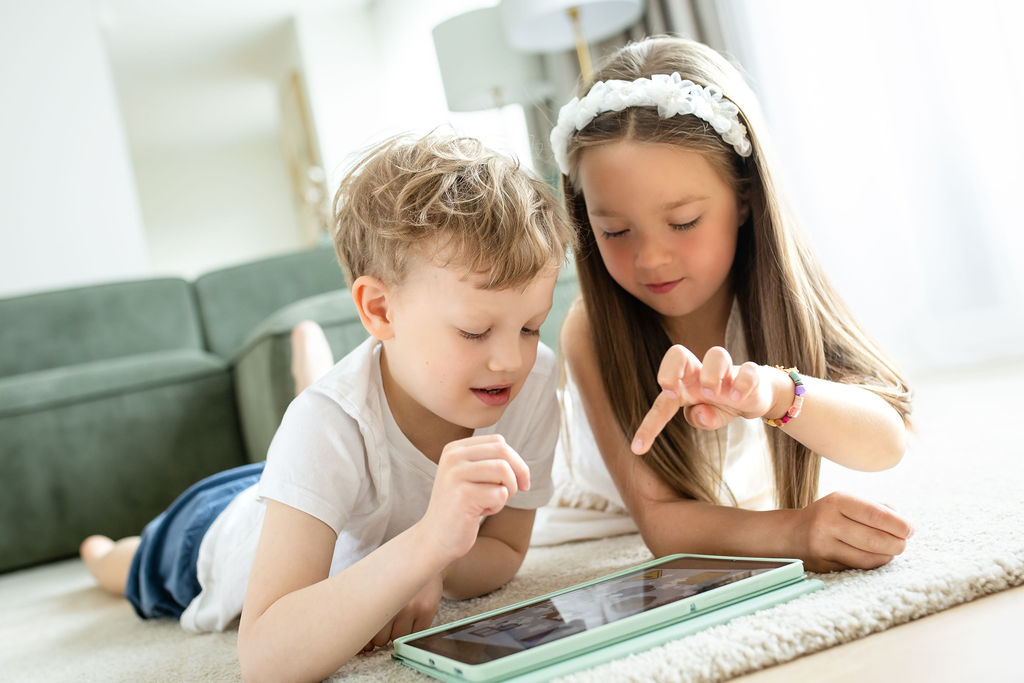
When it comes to active vs. passive screen time for 3 to 8-year-olds, the differences are like night and day. There is a type of screen time for children where a child sits glazed over, swiping mindlessly, while a flashy video plays in the background. And then, there is quality screen time for kids where a child pauses, listens to a friendly voice, makes a thoughtful choice, and proudly declares, “I did it!”. Same device. Completely different learning experience.
The “Woodpecker” Problem: Why Kids Guess Instead of Think
Watch a young child with a typical, overstimulating app. Within seconds, they will start tapping the screen like a highly caffeinated woodpecker, tapping frantic circles, double-clicking randomly, and swiping blindly. If you are looking for how to stop toddler from tapping screen randomly, you have to understand the root cause: they are simply trying to make the flashing colors move faster to bypass the tasks and reach the final prize. They are reacting, not thinking. We can change how they play and guide them toward true active learning for kids.
In her University of Tartu master’s thesis, researcher and teacher Hanna Yaremenko observed this exact “woodpecker” behavior. When she first introduced digital learning games to her language immersion students, they ignored the spoken instructions and clicked objects entirely at random until they accidentally guessed the correct answer. They wanted a quick win, but no real learning was taking place.
The Breakthrough: How a Single Button Changes the Pace
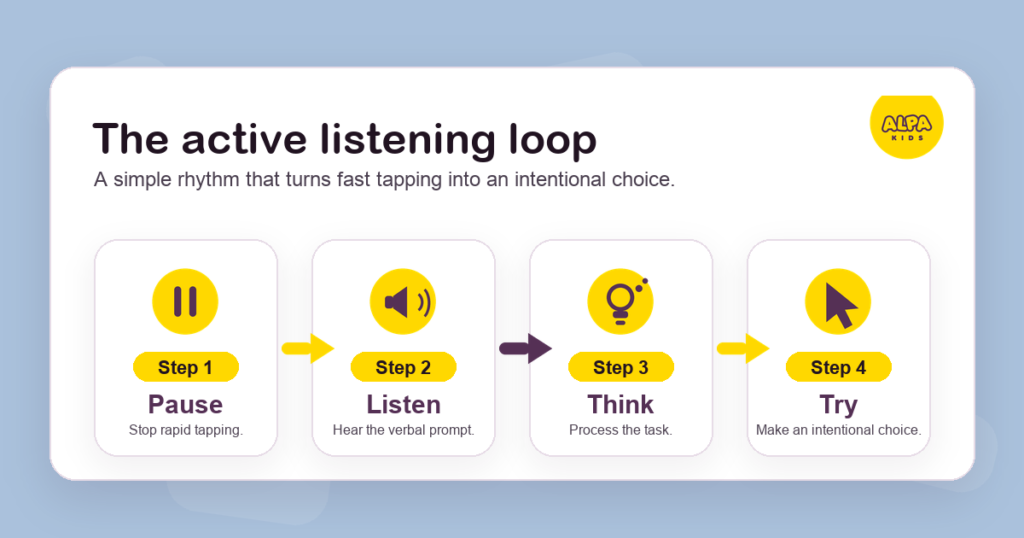
The turning point occurred when the children learned to interact with a simple, highly intentional feature inside ALPA Kids: the vocal repeat button. By showing them how to replay ALPA’s spoken audio instructions, the entire dynamic shifted. This simple mechanic unlocked the power of auditory learning games for preschool children:
- Click & Guess (Frustrating): Tapping rapidly to bypass the task without listening.
- Listen & Repeat (Calm): Pausing, hitting the “repeat” button, and processing instructions at their own pace.
- Success & Confidence (“Well done!”): Solving the task purposefully, building self-esteem, and retaining vocabulary.
Instead of chaotic guessing, the children listened, matched spoken words to visuals, and solved tasks with focused intention.
Calm by Design: Why Interface Matters
Many supposedly educational apps for kids are built like miniature digital casinos, using high-pressure timers and loud effects designed to hook attention through pure overstimulation. There are massive cognitive benefits of calm app design in early childhood, which is why our platform is calm by design. This layout is especially vital for tools like Estonian educational apps for language immersion, where audio clarity is everything: Warm, native-language Vocal Guidance from Alpa the Alpaca replaces visual noise; Zero Pressure ensures no ticking clocks; and the Power of “Well Done!” replaces overwhelming dopamine feedback loops.
When tasks are complete, children interact with balloons that serve as a fun, active transition to practicing motor skills and signaling a clear end to play, making transitions away from the screen easy.
Active Listening is a Cognitive Muscle
Moving from mindless tapping to active listening is a major milestone in early childhood learning. Early learning is less about memorizing static facts and more about building executive functioning—the ability to focus, listen, plan, and execute a thoughtful response. Using ALPA’s auditory cues helps children treat mistakes not as failure, but as a low-stress prompt to hit the repeat button, listen closer, and try again.
The Parent’s Playbook: Three Ways to Slow Down Screen Time
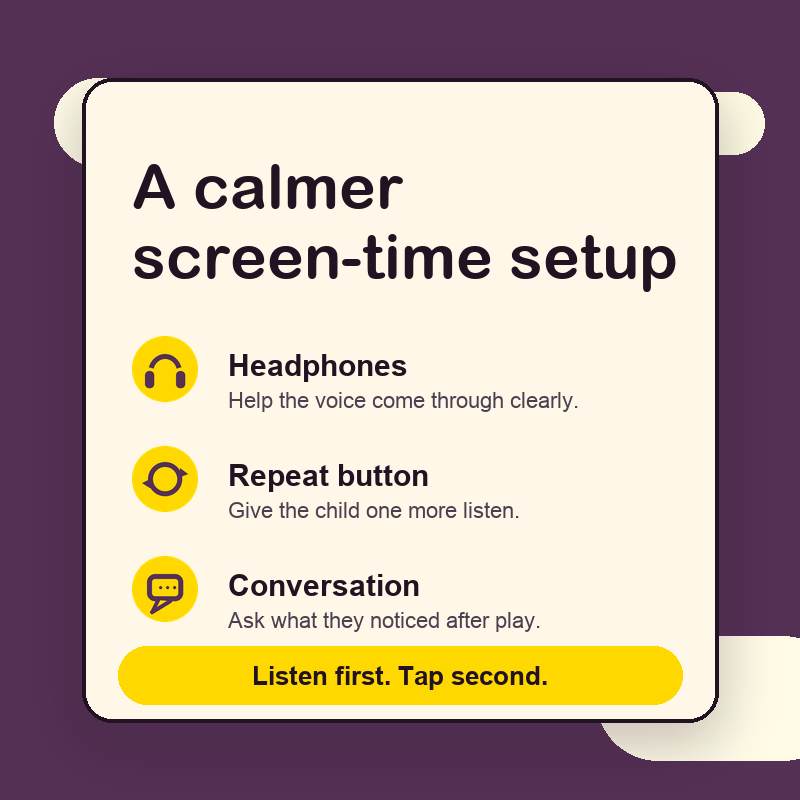
You do not need to hover, but a few small, physical boundaries can instantly transform play:
- 1. Hand Over the Headphones: Headphones filter out background distractions, letting children tune in to the spoken language and focus deeply.
- 2. Practice the “Listen First” Rule: Encourage a ritual: “Wait, let’s hear what the Alpaca says first!” Show them the repeat icon to use whenever they are stuck.
- 3. Turn Play into Conversation: After play, bridge the digital and physical worlds by asking open-ended questions like: “How did you know how to build that pattern?”.
A smarter way to make screen time count
Devices are a natural part of our children’s world. But we control the environments inside those screens. We can let them passively scroll through chaotic content, or we can choose calm, structured spaces that invite them to slow down, think, and solve challenges through their own focus. Think of ALPA as screen broccoli—the wholesome, nutrient-rich brain food that children actually ask to eat.
References
Yaremenko, H. (2023). The uncertainties of digital learning games use in teaching young children (by the immersion method): The case of ALPA Kids (Master’s thesis, University of Tartu). University of Tartu DSpace.
FAQ Section
Why do children tap randomly on tablet screens?
Many kids’ apps teach children that rapid, random tapping will bypass tasks or trigger a fast reward. When apps are loud and overstimulating, children often react with chaotic, fast-paced tapping instead of focused thinking.
How does calm app design support learning?
Calm design removes distracting visual clutter, ads, and flashing lights, allowing children to focus entirely on the educational task. It encourages them to listen to audio prompts and think before they tap.
How does the “repeat” button help children learn?
As observed in university research, the ability to replay spoken vocal instructions helps children move away from guessing. It teaches them to pause, listen carefully to the task, and find the correct solution intentionally.
What is the ideal screen time setup for focus?
A quiet environment with minimal distractions works best. Introducing headphones can help a child focus on spoken educational instructions and prevent them from being distracted by surrounding household noise.