For a child, moving to a new country is a whirlwind of changes. New home, new people, and often, a completely new language to navigate. When a new language comes with a new alphabet and a completely different set of sounds, the challenge can feel like climbing a mountain.
But what if learning that language didn’t have to feel like a lesson?
At ALPA Kids, we’ve seen firsthand how intentional, calm digital play can become a bridge for children settling into new culture and life. For example Ukrainian children settling into Estonian life. Research into how refugee children adapt suggests that play is more than just a pastime—it’s a vital way for children to process their world, build confidence, and yes, learn a new language.
Why play works where lessons falter
Learning a second language is a complex task. It requires focus, motivation, and a fair amount of repetition. For children—especially those who have experienced the stress of fleeing a conflict zone—traditional language lessons can sometimes feel overwhelming.
Research conducted at Tallinn University in 2024 explored this reality. The study looked at how ALPA Kids helped Ukrainian children in Estonian kindergartens and schools. The findings were clear: digital games were not just “screen time”; they were a powerful tool for reinforcement.
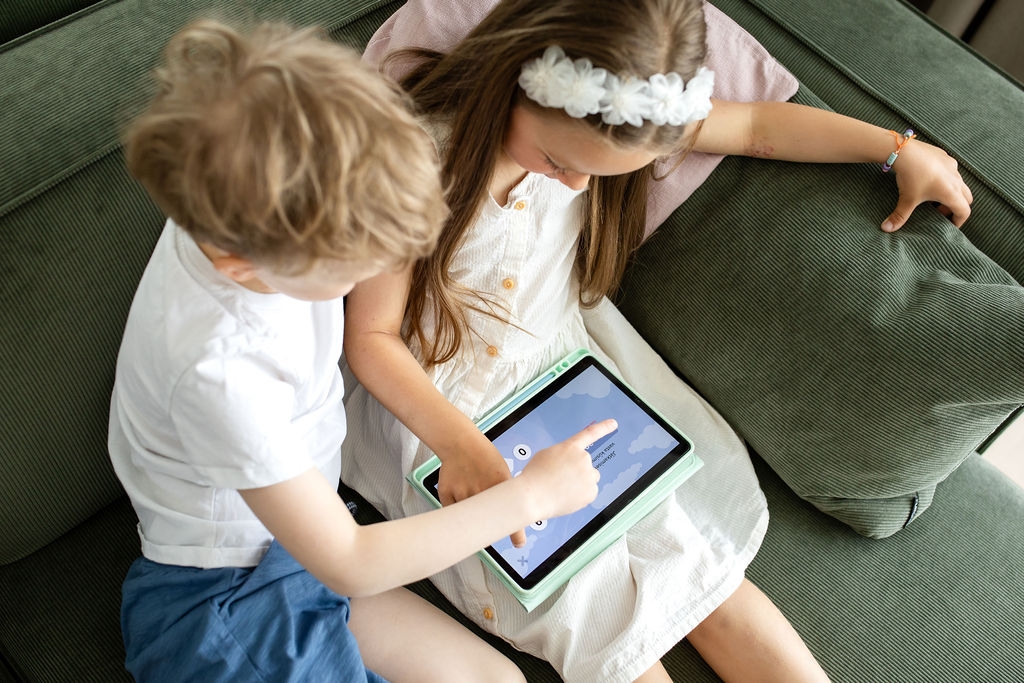
When children used ALPA, they weren’t sitting through a lecture. They were actively matching sounds, practicing the alphabet, and learning numbers—all in a low-pressure environment where they could fail, try again, and succeed at their own pace.
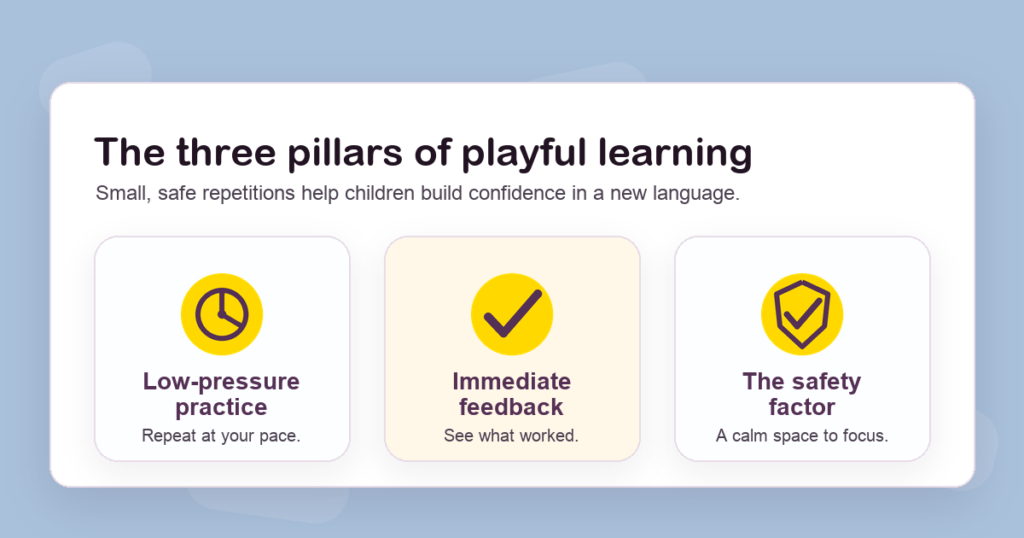
The three pillars of playful learning
Why does this work better than a standard worksheet? The research points to a few key reasons:
- Low-pressure practice: Learning a new language is vulnerable work. In a digital game, the app is a patient partner. It doesn’t get frustrated if you need to repeat a word five times.
- Immediate feedback: When a child taps a correct answer, they hear it. They see it. They know instantly that they got it right. That tiny “I did it!” moment is exactly what builds language confidence.
- The “safety” factor: For many refugee children, life has been unpredictable. Having a calm, predictable digital space where they know exactly what to expect helps them feel safe enough to focus on the task at hand.
More than just words
It’s easy to look at an educational app and count the number of new words a child learns. But the real value is often invisible.
Teachers participating in the 2024 study noted that the games were particularly helpful for consolidating vocabulary and pronunciation—essential building blocks for a child who is hearing a new language for the first time.
But beyond the vocabulary, there was a boost in engagement. Children who had never touched a digital device before found a sense of agency in these games. They weren’t just passively listening to a teacher; they were doing something. They were in the driver’s seat.
A gentle ritual
Does this mean the app does the work for us? Not at all.
As the research emphasized, digital tools are most effective when they are part of a structured approach. It works best when the adult—a parent or teacher—is there to guide the child, pick the right activity, and celebrate the small wins.
If you are supporting a child who is learning a new language, try these small steps:
- Make it a ritual: 10-15 minutes of calm app play is more effective than an hour of frantic tapping.
- Follow their lead: Ask what they liked. “Which word was tricky today?”
- Celebrate the effort: Language learning is a marathon, not a sprint. Celebrate the attempts, not just the perfect scores.
The difference is the design
We built ALPA Kids with local teachers and experts to make sure that when a child picks up a tablet to learn Estonian, they aren’t met with digital noise. They are met with calm, purposeful activities that respect their need for focus.
We aren’t here to replace books, conversation, or outdoor play. We are here to add one more meaningful tool to the toolbox—a tool that helps children feel a little more at home in a new language, one playful game at a time.
Source note
This article is informed by Liina Ints’s 2024 master’s thesis, Ukraina sõjapõgenike laste eesti keele õppimise toetamine ALPA Kids hariduslike mängude keskkonna kaudu (Tallinn University).
FAQ
How can educational apps help children learn a new language? Apps offer repetitive, low-pressure practice for new sounds, words, and grammar patterns. They provide immediate feedback, which helps children build the confidence to use those words in real conversations.
Is ALPA Kids suitable for Ukrainian children learning Estonian? Yes. ALPA Kids was specifically used in studies to support Ukrainian children, and teachers found it helpful for reinforcing new vocabulary and the Estonian alphabet.
Does screen time replace traditional teaching? No. Research shows that apps work best as a support tool for reinforcement when guided by a teacher or parent.